• Plants Plants
    Welcome To My Blog ~ Read Plants Article

Showing posts with label Familia. Show all posts

Friday, December 31, 2010

Flowering plant

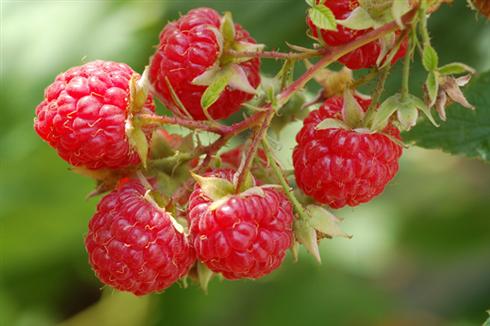
Rubus Berry Plants

Flowering plant


Flowering plant ~ Rubus Berry Plants
Picture Of

Rubus Berry Plants

Rubus Berry Plants

Flowering plant

The Flowering plant (angiosperms), also known as Angiospermae or Magnoliophyta, are the most diverse group of land plants. Angiosperms are seed-producing Plants like the gymnosperms and can be distinguished from the gymnosperms by a series of synapomorphies (derived characteristics). These characteristics include flowers, endosperm within the seeds, and the production of Fruits that contain the seeds.

The ancestors of Flowering Plants diverged from gymnosperms around 245–202 million years ago, and the first Flowering Plants known to exist are from 140 million years ago. They diversified enormously during the Lower Cretaceous and became widespread around 100 million years ago, but replaced conifers as the dominant trees only around 60-100 million years ago.


Flowering plant diversity

The number of species of Flowering Plants is estimated to be in the range of 250,000 to 400,000. The number of Families in APG (1998) was 462. In APG II (2003) it is not settled; at maximum it is 457, but within this number there are 55 optional segregates, so that the minimum number of families in this system is 402. In APG III (2009) there are 415 families.

The diversity of Flowering Plants is not evenly distributed. Nearly all species belong to the eudicot (75%), monocot (23%) and magnoliid (2%) clades. The remaining 5 clades contain a little over 250 species in total, i.e., less than 0.1% of Flowering Plant diversity, divided among 9 families.

The most diverse families of Flowering Plants, in their APG circumscriptions, in order of number of Species.


Related : Rubus
Related : Raspberry

Related : Flowering plant From Wikipedia, the free encyclopedia, Rubus Berry Plants
Read more »

Monday, December 27, 2010

Family

Rubus Berry Plants

Family


Family (biology) ~ Rubus Berry Plants
Picture Of

Rubus Berry Plants

Rubus Berry Plants

Family

In biological classification, family (Latin: familia) is

* a taxonomic rank. Other well-known ranks are Life, Domain, Kingdom, Phylum, Class, Order, Family, Genus, and Species, with family fitting between order and genus. As for the other well-known ranks, there is the option of an immediately lower rank, indicated by the prefix sub-: subfamily (Latin: subfamilia).
* a taxonomic unit, a taxon, in that rank. In that case the plural is families (Latin familiae)

Example: Walnuts and hickories belong to the Juglandaceae, or walnut family.

What does and does not belong to each family is determined by a taxonomist. Similarly for the question if a particular family should be recognized at all. Often there is no exact agreement, with different taxonomists each taking a different position. There are no hard rules that a taxonomist needs to follow in describing or recognizing a family. Some taxa are accepted almost universally, while others are recognised only rarely.


History of the concept

Family, as a rank intermediate between order and genus, is a relatively recent invention.

The taxonomic term familia was first used by French botanist Pierre Magnol in his Prodromus historiae generalis plantarum, in quo familiae plantarum per tabulas disponuntur (1689) where he called the seventy-six groups of plants he recognised in his tables families (familiae). The concept of rank at that time was not yet settled, and in the preface to the Prodromus Magnol spoke of uniting his families into larger genera, which is far from how the term is used today.

Carolus Linnaeus used the word familia in his Philosophia botanica (1751) to denote major groups of plants: trees, herbs, ferns, palms, and so on. He used this term only in the morphological section of the book, discussing the vegetative and generative organs of plants. Subsequently, in French botanical publications, from Michel Adanson's Familles naturelles des plantes (1763) and until the end of the 19th century, the word famille was used as a French equivalent of the Latin ordo (or ordo naturalis). In nineteenth century works such as the Prodromus of Augustin Pyramus de Candolle and the Genera Plantarum of George Bentham and Joseph Dalton Hooker this word ordo was used for what now is given the rank of family.

In zoology, the family as a rank intermediate between order and genus was introduced by Pierre André Latreille in his Précis des caractères génériques des insectes, disposés dans un ordre naturel (1796). He used families (some of them not named) in some but not in all his orders of "insects" (which then included all arthropods).

Since the beginning of the 20th century, however, the term has been consistently used in its modern sense. Its usage and characteristic ending of the names belonging to this category are governed by the various nomenclature codes. These are "-idae" in the zoological code, and "-aceae" in the botanical and bacteriological codes.


Uses

families may be used for evolutionary and palaeontological studies because they are more stable then lower taxonomic levels such as genera and species.


Related : Rubus
Related : Raspberry

Related : Family From Wikipedia, the free encyclopedia, Rubus Berry Plants
Read more »

 
powered by Rubus Berry Plants