• Plants Plants
    Welcome To My Blog ~ Read Plants Article

Saturday, January 8, 2011

Berry

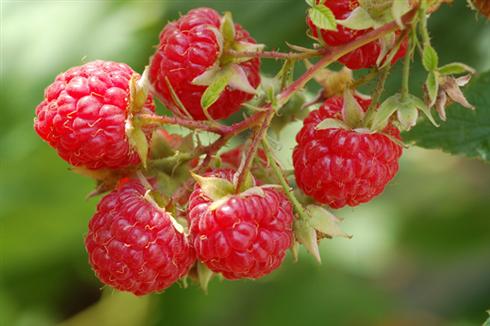
Rubus Berry Plants

Berry


Rubus Berry Plants
Picture Of

Rubus Berry Plants

Rubus Berry Plants

Berry

The botanical definition of a Berry is a fleshy Fruit produced from a single Ovary. Grapes are an example. The Berry is the most common type of fleshy fruit in which the entire Ovary wall ripens into an edible pericarp. They may have one or more carpels with a thin covering and fleshy interiors. The Seeds are usually embedded in the flesh of the Ovary. A plant that bears berries is said to be bacciferous. Many Species of Plants produce fruit that are similar to Berries but not actually Berries, and these are said to be baccate.

In everyday English, "Berry" is a term for any small edible fruit. These "Berries" are usually juicy, round or semi-oblong, brightly coloured, sweet or sour, and don't have a stone or pit, although many seeds may be present.

Many Berries, such as the Tomato, are edible, but others in the same Family, such as the fruits of the deadly nightshade (Atropa belladonna) and the fruits of the Potato (Solanum tuberosum) are poisonous to humans. Some Berries such as Capsicum have space rather than pulp around their seeds.


Botanical berries

In botanical language, a Berry is a simple fruit having seeds and pulp produced from a single Ovary; the Ovary can be inferior or superior.

Examples of botanical Berries include:

* Bearberry (Arctostaphylos spp.)
* Barberry (Berberis; Berberidaceae)
* Crowberry (Empetrum spp.)
* Currant (Ribes spp.; Grossulariaceae), red, black, and white types
* Elderberry (Sambucus niger; Caprifoliaceae)
* Gooseberry (Ribes spp.; Grossulariaceae)
* Grape, Vitis vinifera
* Honeysuckle: the Berries of some Species are edible and are called honeyberries, but others are poisonous (Lonicera spp.; Caprifoliaceae)
* Lingonberry Vaccinium vitis-idaea
* Mayapple (Podophyllum spp.; Berberidaceae)
* Nannyberry or sheepberry (Viburnum spp.; Caprifoliaceae)
* Oregon-grape (Mahonia aquifolium; Berberidaceae)
* Strawberry Tree (Arbutus unedo), not to be confused with the actual strawberry (Fragaria)
* Tomato and other Species of the Family Solanaceae
* Banana
* Cranberry
* Watermelon
* Pumpkin


Modified berries

The fruit of citrus, such as the orange, kumquat and lemon, is a Berry with a thick rind and a very juicy interior that is given the special name hesperidium.

Berries which develop from an inferior Ovary are sometimes termed epigynous Berries or false Berries, as opposed to true Berries which develop from a superior Ovary. In so-called epigynous Berries, the Berry includes tissue derived from parts of the flower besides the Ovary. The floral tube, formed from the basal part of the sepals, petals and stamens can become fleshy at maturity and is united with the Ovary to form the fruit. Common fruits that are sometimes classified as epigynous Berries include bananas, members of the Genus Vaccinium (e.g., cranberries and blueberries), and members of the Cucurbitaceae Family (e.g., cucumbers, melons and squash).

Another specialized term is also for Cucurbitaceae fruits, which are modified to have a hard outer rind. Berries with a hard outer rind are given the special name of pepo. While pepos are most common in the Cucurbitaceae, the fruits of Passiflora and Carica are sometimes also considered pepos.


Not a botanical berry

Many fruits commonly referred to as Berries are not actual Berries by the scientific definition, but fall into one of these categories:

Drupes

Drupes are fleshy fruits produced from a (usually) single-seeded Ovary with a hard stony layer (called the endocarp) surrounding the Seed.

* Plum
* Peach
* Hackberry (Celtis spp.; Cannabaceae)

Other drupe-like fruits with a single seed, that lack the stony endocarp include:

* Avocado (Persea americana)
* Sea-buckthorn (Hippophae rhamnoides; Elaeagnaceae) A single seed inside a fleshy fruit


Pomes

The pome Pyrinae of Family Rosaceae, such as apples and pears, have a structure (the core) that clearly separates the seeds from the Ovary tissue. However, some of the smaller pomes are sometimes referred to as Berries. Bright red haws from Crataegus are sometimes called hawberries. Amelanchier pomes become so soft at maturity that they resemble a blueberry and are known as Juneberries or Saskatoon berries.


Compound fruits

Compound fruits are groups or aggregates of multiple parts, and include:

* Aggregate fruits, which contain seeds from different ovaries of a single flower. Examples include blackberry, Raspberry, and bayberry.
* Multiple fruits, include the fruits of multiple flowers, that are merged or packed closely together. The mulberry is a berry-like example of a multiple fruit; it develops from a cluster of tiny separate flowers that become compressed as they develop into fruit.


Accessory fruits

In accessory fruits, the edible part is not generated by the Ovary. Berry-like examples include:

* Strawberry - the aggregate of seed-like Achenes is actually the "fruit", derived from an aggregate of ovaries, and the fleshy part develops from the receptacle.
* Gurbir, Duchesnea indica - structured just like a strawberry
* Sea Grape (Coccoloba uvifera; Polygonaceae) - the fruit is a dry Capsule surrounded by fleshy calyx
* Wintergreen (Gaultheria procumbens) - the fruit is a dry capsule surrounded by fleshy calyx


Related : Rubus
Related : Raspberry

Related : Berry From Wikipedia, the free encyclopedia, Rubus Berry Plants
Read more »

Friday, January 7, 2011

Silique

Rubus Berry Plants

Silique


Silique ~ Rubus Berry Plants
Picture Of

Rubus Berry Plants

Rubus Berry Plants

Silique

A Silique or siliqua (plural Siliques or siliquae) is a Fruit (seed Capsule) of 2 fused carpels with the length being more than twice the width. The outer walls of the ovary (the valves) usually separate when ripe, leaving a persistent partition (the replum). This classification includes many members of the Brassicaceae Family, but some Species have a shorter fruit of similar structure, in which case the fruit is called silicle. Some Species that are closely related to Plants with true Siliques have fruits with a similar structure that do not open when ripe; these are usually called indehiscent Siliques (compare dehiscence).

siliqua is a Genus of saltwater razor clams, marine bivalve mollusks in the family Cultellidae, the razor clams and jackknife clams.


Species

The following Species of Siliqua genus are described:

* Siliqua albida (Adams et Reeve, 1850)
* Siliqua alta (Broderip et Sowerby, 1829) – northern or Arctic razor clam
* Siliqua costata (Say, 1822) – Atlantic razor clam
* Siliqua fasciata (Spengler, 1794)
* Siliqua grayana (Dunker, 1862)
* Siliqua minima (Gmelin, 1791)
* Siliqua patula – Pacific razor clam[citation needed]
* Siliqua polita
* Siliqua pulchella Dunker, 1852
* Siliqua radiata (Linnaeus, 1758)
* Siliqua rostrata (Dunker, 1862)
* Siliqua sloati


Radish

The radish (Raphanus sativus) is an edible root vegetable of the Brassicaceae family that was domesticated in Europe in pre-Roman times. They are grown and consumed throughout the world. Radishes have numerous varieties, varying in size, color and duration of required cultivation time. There are some radishes that are grown for their seeds; oilseed radishes are grown, as the name implies, for oil production.


Related : Rubus
Related : Raspberry

Related : Silique From Wikipedia, the free encyclopedia, Rubus Berry Plants
Read more »

Schizocarp

Rubus Berry Plants

Schizocarp


Schizocarp ~ Rubus Berry Plants
Picture Of

Rubus Berry Plants

Rubus Berry Plants

Schizocarp

A Schizocarp is a dry Fruit that develops from multiple carpels. When mature it splits up into mericarps. Mericarps are often 1-seeded as in, for example, Malva, Malvastrum, and Sida. In others, for example, in Abutilon, the mericarps have two or more seeds.

The mericarp is either:

* Dehiscent (splits open to release the Seed), for example members of the Genus Geranium. This is similar to what happens with a Capsule, but with an extra stage.
* Indehiscent (remaining closed), such as in the carrot or in members of the genus Malva.

In Abutilon, the mericarp is sometimes only partially dehiscent and does not release the seed.


Related : Rubus
Related : Raspberry

Related : Schizocarp From Wikipedia, the free encyclopedia, Rubus Berry Plants
Read more »

Samara

Rubus Berry Plants

Samara


Samara ~ Rubus Berry Plants
Picture Of

Rubus Berry Plants

Rubus Berry Plants

Samara

A Samara is a type of Fruit in which a flattened wing of fibrous, papery tissue develops from the ovary wall. A Samara is a simple dry fruit and indehiscent (not opening along a seam). They are winged Achenes. The shape of a Samara enables the wind to carry the Seed farther away from the parent tree:

* The seed can be in the centre of the wing, as in the elms (Genus Ulmus) and the hoptree (Ptelea trifoliata).
* The seed can be on one side, with the wing extending to the other side, making the seed autorotate as it falls, as in the maples (genus Acer) and ashes (genus Fraxinus).

A Samara is sometimes called a key and is often referred to as a whirlybird, helicopter, whirligig, polynose, or, in the north of England, a spinning jenny.

Some Species that normally produce double Samaras, such as Acer pseudoplatanus, can also produce a few multi-lobed Samaras with 3 or 4 seeds.


Related : Rubus
Related : Raspberry

Related : Samara From Wikipedia, the free encyclopedia, Rubus Berry Plants
Read more »

Thursday, January 6, 2011

Nut

Rubus Berry Plants

Nut


Nut ~ Rubus Berry Plants
Picture Of

Rubus Berry Plants

Rubus Berry Plants

Nut

A Nut is a hard-shelled Fruit of some Plants having an indehiscent Seed. While a wide variety of dried Seeds and Fruits are called nuts in English, only a certain number of them are considered by biologists to be true nuts. Nuts are an important source of nutrients for both humans and wildlife.

Nuts are a composite of the seed and the fruit, where the fruit does not open to release the seed. Most seeds come from fruits, and the seeds are free of the fruit, unlike nuts like hazelnuts, hickories, chestnuts and acorns, which have a stony fruit wall and originate from a compound ovary. Culinary usage of the term is less restrictive, and some nuts as defined in food preparation, like pistachios and Brazil nuts, are not nuts in a biological sense. Everyday common usage of the term often refers to any hard walled, edible kernel, as a nut.


Botanical definition

A nut in botany is a simple dry fruit with one seed (rarely two) in which the ovary wall becomes very hard (stony or woody) at maturity, and where the seed remains attached or fused with the ovary wall. Most nuts come from the pistils with inferior ovaries (see flower) and all are indehiscent (not opening at maturity). True nuts are produced, for example, by some plant Families of the order Fagales.


Order Fagales

Family Fagaceae

  • o Beech (Fagus)

  • o Chestnut (Castanea)

  • o Oak (Quercus)

  • o Stone-oak, Tanoak (Lithocarpus)


Family Betulaceae

  • o Alder (Alnus)

  • o Hazel, Filbert (Corylus)

  • o Hornbeam


Culinary definition and uses

A nut in cuisine is a much less restrictive category than a nut in botany, as the term is applied to many seeds that are not botanically true nuts. Any large, oily kernel found within a shell and used in food may be regarded as a nut.

Because nuts generally have a high oil content, they are a highly prized food and energy source. A large number of seeds are edible by humans and used in cooking, eaten raw, sprouted, or roasted as a snack food, or pressed for oil that is used in cookery and cosmetics. Nuts (or seeds generally) are also a significant source of nutrition for wildlife. This is particularly true in temperate climates where animals such as jays and squirrels store acorns and other nuts during the autumn to keep them from starving during the late autumn, all of winter, and early spring.

Nuts used for food, whether true nut or not, are among the most common food allergens.

Some fruits and seeds that do not meet the botanical definition but are nuts in the culinary sense:

* Almonds, Pecans and Walnuts are the edible seeds of drupe fruits — the leathery "flesh" is removed at harvest.
* Brazil nut is the seed from a capsule.
* Candlenut (used for oil) is a seed.
* Cashew nut is a seed.
* Gevuinanut
* Horse-chestnut is an inedible capsule.
* Macadamia nut is a creamy white kernel (Macadamia integrifolia).
* Malabar chestnut
* Mongongo
* Peanut is a legume.
* Pine nut is the seed of several Species of pine (coniferous trees).
* Pistachio nut is the seed of a thin-shelled drupe.


Related : Rubus
Related : Raspberry

Related : Nut From Wikipedia, the free encyclopedia, Rubus Berry Plants
Read more »

Wednesday, January 5, 2011

Loment

Rubus Berry Plants

Loment


Loment ~ Rubus Berry Plants
Picture Of

Rubus Berry Plants

Rubus Berry Plants

Loment

A Loment is a type of modified Legume that breaks apart at constrictions occurring between the segments of the Seeds. Being a legume, it is dry at maturity and is dehiscent, meaning that it will split open at maturity.

Tick trefoil (Desmodium) and sweet vetch (Hedysarum) are two genera that exhibit this Fruit type, which is found particularly in the Hedysareae tribe of the Family Fabaceae, with the exception of the peanut.

A closer look at the photo above shows another typical characteristic of members of the Pea Family, to belabor the obvious, they produce pea pods. In our mystery Plant, the pods are not cylindrical as in string beans or snap peas, but are long and flattened with the peas separated into "Loments"--segments that contain one seed each. The photo below provides a better look.

One fertilized flower on our mystery plant will produce 3-5 Loments that start out being pale green and transected by darker green veins that bring nutrients to the peas as they develop. A second photo (below) uses backlighting to reveal the immature peas, i.e., the seeds of the plant that show as dark shadows at the center of each Loment. As the peas mature, the skin of the Loments becomes dark green and leathery, and the constricted area between them turns brown and becomes brittle.


Related : Rubus
Related : Raspberry

Related : Loment From Wikipedia, the free encyclopedia, Rubus Berry Plants
Read more »

Tuesday, January 4, 2011

Legume

Rubus Berry Plants

Legume


Legume ~ Rubus Berry Plants
Picture Of

Rubus Berry Plants

Rubus Berry Plants

Legume

A Legume in botanical writing is a Plant in the Family Fabaceae (or Leguminosae), or a Fruit of these specific Plants. A Legume Fruit is a simple dry fruit that develops from a simple carpel and usually dehisces (opens along a seam) on two sides. A common name for this type of Fruit is a pod, although the term "pod" is also applied to a few other Fruit types, such as vanilla and radish. Well-known legumes include alfalfa, clover, peas, beans, lentils, lupins, mesquite, carob, soy, and peanuts. Locust trees (Gleditsia or Robinia), wisteria, and the Kentucky Coffeetree (Gymnocladus dioicus) are all legumes.


History

The term Legume, is derived from the Latin word legumen (with the same meaning as the English term), which is in turn believed to come from the verb legere "to gather." English borrowed the term from the French "légume," which, however, has a wider meaning in the modern language and refers to any kind of vegetable; the English word Legume being translated in French by the word légumineuse.

The history of Legumes is tied in closely with that of human civilization, appearing early in Asia, the Americas (the common Phaseolus bean in several varieties), and Europe (broad beans) by 6000 BC, where they became a staple, essential for supplementing protein where there was not enough meat.


Related : Rubus
Related : Raspberry

Related : Legume From Wikipedia, the free encyclopedia, Rubus Berry Plants
Read more »

Monday, January 3, 2011

Follicle

Rubus Berry Plants

Follicle


Follicle ~ Rubus Berry Plants
Picture Of

Rubus Berry Plants

Rubus Berry Plants

Follicle

n botany, a Follicle is a dry unilocular many-seeded Fruit formed from one carpel and dehiscing by the ventral suture in order to release Seeds, such as in larkspur, magnolia, banksia, peony and milkweed.

It is rare to meet with a solitary Follicle forming the fruit. There are usually several aggregated together, either in a whorl on a shortened receptacle, as in hellebore, aconite, larkspur, columbine or the Family Crassulaceae, or in a spiral manner on an elongated receptacle, as in Magnolia and Banksia. Occasionally, Follicles dehisce by the dorsal suture, as in Magnolia grandiflora and Banksia.

Follicle, a form of fruit placed by Lindley in his Class Apocarpi. It differs from the legume in having but one valve instead of two. A flower of Nigella, or one of Delphinium, produces several such Follicles. In anatomy, a Follicle is a minute secreting bag, which commonly opens upon a mucous membrane; a simple gland. It is called also a crypt or lacuna.


Related : Rubus
Related : Raspberry

Related : Follicle From Wikipedia, the free encyclopedia, Rubus Berry Plants
Read more »

Sunday, January 2, 2011

Drupe

Rubus Berry Plants

Drupe


Drupe ~ Rubus Berry Plants
Picture Of

Rubus Berry Plants

Rubus Berry Plants

Drupe

In botany, a Drupe is a Fruit in which an outer fleshy part (exocarp, or skin; and mesocarp, or flesh) surrounds a shell (the pit or stone or pyrene) of hardened endocarp with a Seed inside. These fruits develop from a single carpel, and mostly from flowers with superior ovaries. The definitive characteristic of a Drupe is that the hard, lignified stone (or pit) is derived from the ovary wall of the flower.

Other fleshy fruits may have a stony enclosure that comes from the seed coat surrounding the seed, but such fruits are not Drupes.

Some Flowering plants that produce Drupes are coffee, jujube, mango, olive, most palms (including date, coconut and oil palms), pistachio, and all members of the Genus Prunus, including the almond (in which the mesocarp is somewhat leathery), apricot, cherry, damson, nectarine, peach, and plum.

Drupes, with their sweet, fleshy outer layer, attract the attention of animals as a food, and the Plant population benefits from the resulting dispersal of its seeds. The endocarp (pit or stone) is often swallowed, passing through the digestive tract, and returned to the soil in feces with the seed inside unharmed; sometimes it is dropped after the fleshy part is eaten.

Corking is a nutritional disorder in stone fruit caused by a lack of boron and/or calcium.

Many stone fruits contain sorbitol, which can exacerbate conditions such as irritable bowel syndrome and fructose malabsorption.


Tryma

Some fruits are borderline and difficult to categorize. Hickory nuts (Carya) and Walnuts (Juglans) in the Juglandaceae Family grow within an outer husk; these fruits are technically drupes or drupaceous nuts, and thus not true botanical nuts. Tryma is a specialized term for such nut-like drupes.


Related : Rubus
Related : Raspberry

Related : Drupe From Wikipedia, the free encyclopedia, Rubus Berry Plants
Read more »

Caryopsis

Rubus Berry Plants

Caryopsis


Caryopsis ~ Rubus Berry Plants
Picture Of

Rubus Berry Plants

Rubus Berry Plants

Caryopsis

In botany, a Caryopsis is a type of simple dry Fruit — one that is monocarpelate (formed from a single carpel) and indehiscent (not opening at maturity) and resembles an Achene, except that in a Caryopsis the pericarp is fused with the thin seed coat.

The Caryopsis is popularly called a grain and is the fruit typical of the Family Poaceae (or Gramineae), such as wheat, rice, and corn.

The term grain is also used in a more general sense as synonymous with cereal (as in "cereal grains", which include some non-Gramineae). Considering that the fruit wall and the seed are intimately fused into a single unit, and the Caryopsis or grain is a dry fruit, little concern is given to technically separating the terms "fruit" and "Seed" in these plant structures. In many grains, the "hulls" to be separated before processing are actually flower bracts.


Related : Rubus
Related : Raspberry

Related : Caryopsis From Wikipedia, the free encyclopedia, Rubus Berry Plants
Read more »

Saturday, January 1, 2011

Capsule

Rubus Berry Plants

Capsule


Capsule ~ Rubus Berry Plants
Picture Of

Rubus Berry Plants

Rubus Berry Plants

Capsule

In botany a Capsule is a type of simple, dry Fruit produced by many Species of Flowering plants. A Capsule is a structure composed of two or more carpels that in most cases is dehiscent, i.e. at maturity, it splits apart (dehisces) to release the Seeds within. A few Capsules are indehiscent, for example those of Adansonia digitata, Alphitonia, and Merciera. In some Capsules, the split occurs between carpels, and in others each carpel splits open. In yet others, seeds are released through openings or pores that form in the Capsules.

If it is the upper part of the Capsule that dehisces, the Capsule is also called a pyxis. For example, in the Brazil nut, a lid on the Capsule opens, but is too small to release the dozen or so seeds (the actual "Brazil nut" of commerce) within. These germinate inside the Capsule after it falls to the ground.

Capsules are sometimes mislabeled as nuts, as in the example of the Brazil nut or the Horse-chestnut. A Capsule is not a nut because it releases its seeds and it splits apart. Nuts on the other hand do not release seeds as they are a compound ovary containing both a single seeds and the Fruit. Nuts also do not split.

Examples of Plants that produce Capsules are nigella, poppy, lily, orchid, willow, cotton, and jimson weed.


Related : Rubus
Related : Raspberry

Related : Capsule From Wikipedia, the free encyclopedia, Rubus Berry Plants
Read more »

Seed

Rubus Berry Plants

Seed


Seed ~ Rubus Berry Plants
Picture Of

Rubus Berry Plants

Rubus Berry Plants

Seed

A Seed is a small embryonic plant enclosed in a covering called the Seed coat, usually with some stored food. It is the product of the ripened ovule of gymnosperm and angiosperm Plants which occurs after fertilization and some growth within the mother plant. The formation of the Seed completes the process of Reproduction in seed plants (started with the development of flowers and pollination), with the embryo developed from the zygote and the Seed coat from the integuments of the ovule.

Seeds have been an important development in the reproduction and spread of Flowering plants, relative to more primitive plants like mosses, ferns and liverworts, which do not have Seeds and use other means to propagate themselves. This can be seen by the success of seed plants (both gymnosperms and angiosperms) in dominating biological niches on land, from forests to grasslands both in hot and cold climates.

The term Seed also has a general meaning that predates the above — anything that can be sown, e.g. "Seed" potatoes, "seeds" of corn or sunflower "Seeds". In the case of sunflower and corn "Seeds", what is sown is the Seed enclosed in a shell or hull, and the potato is a tuber.


Seed structure

A typical Seed includes three basic parts: (1) an embryo, (2) a supply of nutrients for the embryo, and (3) a Seed coat.

The embryo is an immature plant from which a new plant will grow under proper conditions. The embryo has one cotyledon or Seed leaf in monocotyledons, two cotyledons in almost all dicotyledons and two or more in gymnosperms. The radicle is the embryonic root. The plumule is the embryonic shoot. The embryonic stem above the point of attachment of the cotyledon(s) is the epicotyl. The embryonic stem below the point of attachment is the hypocotyl.

Within the Seed, there usually is a store of nutrients for the seedling that will grow from the embryo. The form of the stored nutrition varies depending on the kind of plant. In angiosperms, the stored food begins as a tissue called the endosperm, which is derived from the parent plant via double fertilization. The usually triploid endosperm is rich in oil or starch and protein. In gymnosperms, such as conifers, the food storage tissue is part of the female gametophyte, a haploid tissue. In some Species, the embryo is embedded in the endosperm or female gametophyte, which the seedling will use upon germination. In others, the endosperm is absorbed by the embryo as the latter grows within the developing Seed, and the cotyledons of the embryo become filled with this stored food. At maturity, Seeds of these species have no endosperm and are termed exalbuminous Seeds. Some exalbuminous Seeds are bean, pea, oak, walnut, squash, sunflower, and radish. Seeds with an endosperm at maturity are termed albuminous Seeds. Most monocots (e.g. grasses and palms) and many dicots (e.g. brazil nut and castor bean) have albuminous Seeds. All gymnosperm Seeds are albuminous.

The Seed coat (or testa) develops from the tissue, the integument, originally surrounding the ovule. The Seed coat in the mature Seed can be a paper-thin layer (e.g. peanut) or something more substantial (e.g. thick and hard in honey locust and coconut). The Seed coat helps protect the embryo from mechanical injury and from drying out.

In addition to the three basic Seed parts, some Seeds have an appendage on the Seed coat such an aril (as in yew and nutmeg) or an elaiosome (as in Corydalis) or hairs (as in cotton). There may also be a scar on the Seed coat, called the hilum; it is where the Seed was attached to the ovary wall by the funiculus.


Related : Rubus
Related : Raspberry

Related : Seed From Wikipedia, the free encyclopedia, Rubus Berry Plants
Read more »

 
powered by Rubus Berry Plants